The short answer
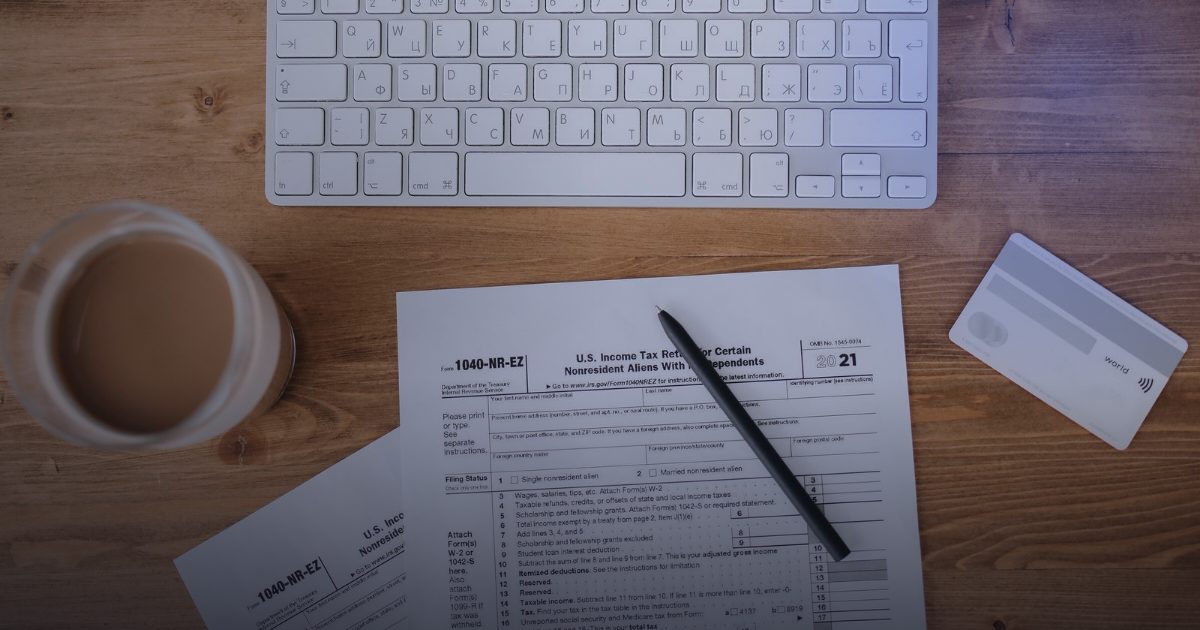
Form W-8BEN tells a US payer that you aren't a US person, and it's the payer who asks for it. The IRS says: "Submit Form W-8 BEN when requested by the withholding agent or payer whether or not you are claiming a reduced rate of, or exemption from, withholding."
You give it to the payer, not to the IRS. The instructions say: "Do not send Form W-8BEN to the IRS." It's general US paperwork, and it does nothing about tax in your own country. This page is general information, not tax advice.
Why a US payer wants it
Under US rules, foreign persons can face a 30% tax on certain US source income, and that list includes compensation for services. The form helps the payer show that you're foreign and which rule applies. The instructions warn that without this form, the payer may have to withhold at the 30% rate or at the backup withholding rate.
Here's the part that helps most remote workers. IRS Publication 515 says: "Compensation paid to a nonresident alien (other than a resident of Puerto Rico, discussed later) for services performed outside the United States is not considered wages and is not subject to withholding." The same publication says the part of pay for services outside the US "is foreign source income".
So if you do the work from Nairobi or Accra, you state that on the paperwork and the payer has what it needs. If you travel to the US to work, that's a different case, so ask before you go.
What to write, line by line
Part I is about who you are.
| Line | What the instructions say |
|---|---|
| 1 | Your name. |
| 2 | Your country of citizenship. If you're a dual citizen, the country where you're both a citizen and a resident. A US citizen shouldn't use this form, and gives a Form W-9 instead. |
| 3 | Your permanent residence address, in the country where you're a resident for income tax. Don't use a bank's address, a post office box or a mailing-only address. If your country doesn't use street addresses, you may write a descriptive address that accurately shows where you live. |
| 4 | Your mailing address, only if it's different from line 3. This is where a PO box can go. |
| 5 | A US social security number, if you have one, or an ITIN. It's needed for certain treaty claims and a few other cases, such as a partnership doing business in the US. |
| 6a | Your foreign tax number, issued by the country on line 3. It's required when you're documenting a financial account at a US office of a financial institution. You may also give it to claim treaty benefits. |
| 6b | A box for account holders who aren't legally required to get a foreign tax number, including where the country doesn't issue them. |
| 7 | A reference number, which is useful to the payer. Optional. Leave it empty if they don't ask. |
| 8 | Your date of birth, written MM-DD-YYYY, needed for the account holder case on line 6. So 15 April 1996 is 04-15-1996. |
Watch the date format. Most of Africa writes the day first, and this form puts the month first.
If your payer uses an online version that insists on line 6a, give your national tax number if you have one. In Kenya that's your KRA PIN, in Uganda your TIN.
Part II: most readers leave it alone
Part II, lines 9 and 10, is where you claim tax treaty benefits. The IRS's list of US income tax treaties has four African countries: Egypt, Morocco, South Africa and Tunisia. Kenya and Nigeria aren't on it. That's our reading of the A to Z list, so check it when you sign.
If your country has no treaty with the US, there's nothing to claim, and these lines stay empty. If you're in one of the four, ask an adviser or your payer before you fill them in. A treaty claim brings its own conditions, and it can mean you need a tax number on line 5 or 6.
Part III: sign it
You sign and date it. The form must be signed by the person who gets the money, or by an agent with legal authority. Read the statements above the signature first, as you're certifying them. Give the form to your payer before the first payment if you can.
How long it lasts
The form lasts from the day you sign it, "ending on the last day of the third succeeding calendar year". The IRS's own example is a form signed on 30 September 2015, valid until 31 December 2018. So one you sign in November 2026 runs to 31 December 2029.
It ends sooner if your facts change and make something on it wrong. In that case, tell the payer within 30 days and give a new form. A move to an address in the US counts as a change. A move within your country, or to another foreign country, generally doesn't, unless you claimed a treaty.
It doesn't cancel tax at home
This is the mistake to avoid. W-8BEN is about US tax only. If the payer takes no US tax, that doesn't mean you owe nothing. The tax rules of the country where you live still apply. See our guides for Kenya, Nigeria, Uganda and other countries.
Are you a contractor or an employee? Read contractor or employee, and use our free invoice maker if you bill your client. When you're ready, browse remote roles. One thing to check on any request for this form: it should come from a real payer you've already checked. Don't give your tax number and date of birth to someone you've only met on a messaging app. Our scam check can help.